

Tenant screening feels intimidating the first time you do it. You want good people in your place, you want steady rent, and you really want to stay on the right side of the law. A clear tenant screening checklist plus a few key legal tips turns this from a guessing game into a repeatable process you can trust.
In this guide, you will walk through a practical tenant screening checklist, step by step. You will also see where legal rules like fair housing, consent, and privacy come in, so you stay compliant and avoid nasty surprises later.
Tenant screening is more than a “good vibe” check. It is your main line of defense against:
Rentastic’s 2025 guidance highlights that an ineffective tenant screening process exposes you to real financial risk, especially if you depend on rent to cover mortgage payments and maintenance. A simple, consistent checklist protects both your property and your peace of mind.
If you want a fast overview before diving deep, you can also explore tenant screening 101: a simple checklist every new landlord should follow. The rest of this article will go further, with added legal tips and nuance for first-timers.
Before you list your property or talk to your first applicant, write down your rental criteria. This keeps you consistent, reduces bias, and helps you stay compliant with fair housing laws.
Think in terms of objective, measurable criteria you will apply equally to every applicant, for example:
Make sure none of your criteria single out or disadvantage anyone based on protected characteristics like race, color, religion, sex, national origin, disability, or familial status. The 2025 Rentastic guidance underlines that compliance with the Fair Housing Act is non negotiable. Design your criteria around behavior, risk, and financial reliability, not who someone is.
When you have criteria that are clear and fair, share them in your listing and with every applicant. That transparency builds trust and reduces misunderstandings.
A thorough tenant application form is the foundation of your tenant screening checklist. This is where you collect the information you will later verify.
Your form should request:
Rentastic’s 2025 guide stresses that gathering detailed personal, employment, income, and rental history information up front helps you assess suitability and reduce the risk of property damage or eviction later. A rushed or vague application is one of the classic first-time landlord mistakes: skipping this tenant screening checklist can cost you thousands.
Always include a clear authorization section where the applicant signs to allow you to run background and credit checks. Keep that signed authorization in your records.
Once you receive an application, verify that the person on paper matches the person in front of you.
Ask for:
You are checking for consistency: name, date of birth, and address history should all line up with the application. If something does not match, ask politely for clarification. Simple clerical errors are normal, but vague or defensive answers can be a red flag.
Employment and income verification is one of the most important steps in your tenant screening checklist and it is where you directly protect your cash flow.
Rentastic’s 2025 recommendations are clear. First time landlords should:
You can ask the tenant to provide:
Then, with signed consent in hand, you may contact the employer to confirm:
The research for 2025 highlights that verifying job stability and reliable income like this is vital for assessing the applicant’s ability to pay rent consistently. Do not skip the employer call just because the documents “look fine.” A five minute conversation can save you months of stress.
Past behavior is one of the best predictors of how a tenant will treat your property. That is why checking rental history is so central to any serious tenant screening checklist.
Ask for at least two prior landlord references, then call them yourself. With each previous landlord, you want to know:
The 2025 Rentastic guidance points out that contacting previous landlords to inquire about payment timeliness, behavior, and property condition is a critical legal and practical step. These calls often reveal patterns that a credit report will not show, like constant minor rule breaking, noise complaints, or poor communication.
Be aware that current landlords might be tempted to give a glowing review to “move on” a problem tenant. Prior landlords who no longer have any stake in the situation often give more candid feedback.
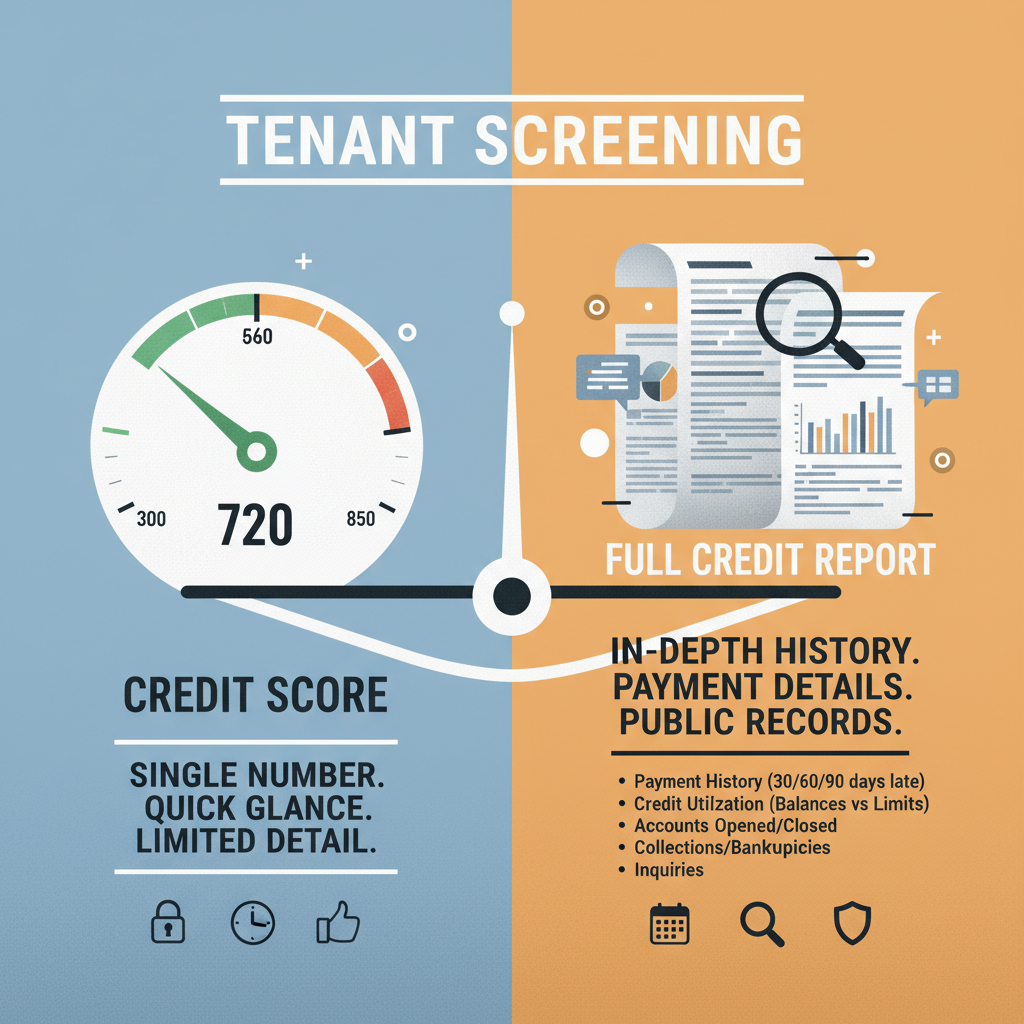
A credit check gives you insight into an applicant’s financial responsibility. You are not looking for perfection, you are looking for patterns.
With the applicant’s written consent, use a reputable tenant screening service or credit bureau to obtain a report. The 2025 Rentastic guidance recommends this as a standard step for first time landlords, because it helps you see:
Combine what you see with your rental criteria. An applicant with one old medical collection and strong, current income might still be a great fit. An applicant with repeated late payments across several accounts and no clear explanation might not be.
Use your credit criteria consistently for every applicant to stay fair and compliant. Do not set the bar higher or lower based on personal impressions that relate to protected characteristics.
Background and eviction checks add another layer of risk management. Rentastic’s 2025 guidance recommends that first time landlords perform:
Here you are looking for issues that might affect safety, property, or likelihood of future eviction. For example, a long history of eviction filings, repeated property damage, or violent crimes may be incompatible with your property and other tenants.
However, you must handle criminal history carefully from a legal perspective. Under fair housing guidance, blanket bans like “no one with any criminal record” can be discriminatory. Many jurisdictions now expect landlords to consider:
Some states and cities also restrict how and when you can use criminal records in tenant screening. Check your local laws before you set hard rules in this area and when in doubt, seek legal advice.
Numbers and documents tell part of the story. A brief conversation fills in the rest.
An in person or video interview lets you:
The 2025 Rentastic guidance recommends in person interviews as a way to assess personality fit and non verbal cues, which can help you select tenants more likely to maintain a positive relationship.
Keep your questions consistent from candidate to candidate and focus on topics that relate to the tenancy, such as:
Avoid any questions that touch on protected characteristics. You do not need to ask about marital status, religion, plans to have children, or national origin. If these topics arise naturally, steer the conversation back to the rental.
Legal compliance is not a separate box at the end of your tenant screening checklist. It runs through every step.
According to Rentastic’s 2025 guidance, first time landlords must comply with the Fair Housing Act by avoiding discrimination based on:
Many states and cities add more protected classes, such as age, sexual orientation, gender identity, or source of income. Know your local rules and treat them as an absolute baseline.
In practice, staying compliant means you:
The 2025 Rentastic article emphasizes that following fair housing laws during tenant screening protects you from legal penalties and reduces liability risk. A complaint or lawsuit can be far more expensive than a month of vacancy.
If you are unsure whether your criteria or questions are compliant, talk with a local landlord attorney or housing agency before you post your listing.
You handle sensitive personal information when you screen tenants. That creates legal and ethical duties around consent and privacy.
Build these practices into your checklist:
Make sure applicants know how you will use their information and that you will not share it casually. Respectful privacy practices build trust and keep you aligned with common data protection expectations, even if your local laws are still catching up.
Your tenant screening checklist does not end with choosing a tenant. It continues into the lease you sign together. This is where you turn all your expectations into clear, written commitments.
Rentastic’s 2025 property management plan guidance recommends including specific tenant clauses about:
A strong lease reduces future disputes because everyone knows the rules from day one. It also supports your legal position if you ever need to enforce those rules.
Make sure your lease:
If you are new to this, consider using a vetted lease template tailored to your state and have a local attorney review any custom clauses you add.
Even a perfectly screened tenant needs support. Ongoing property management is part of your risk control strategy and it directly affects tenant satisfaction and retention.
The 2025 Rentastic blog stresses that:
Right from move in, show tenants how to reach you and how to report issues. Then follow through with:
Also, schedule regular inspections as allowed by local law. Give proper notice, be respectful of privacy, and document what you see. This helps you spot small problems before they become large, expensive ones.
A comprehensive property management plan becomes your GPS for balancing tenant issues, property condition, and finances, as highlighted by Rentastic in 2025. It is not just about rules, it is about building a system where good tenants want to stay.
Here is how your tenant screening checklist plus legal tips might flow in real life:
If you want a deeper walkthrough of how each step fits into a repeatable workflow, you can also read from application to approval: a step-by-step tenant screening workflow for first-time landlords and the complete tenant screening checklist for first-time landlords (2026 guide).
When you treat tenant screening as a structured, fair, and legally aware process, you stop relying on gut feelings and start running your rentals like a solid business.
You do not need decades of experience to screen tenants well. You just need a checklist you trust, a basic understanding of the legal rules, and the discipline to follow your own process every time.
RECENT POSTS


© 2025 Rentastic
Rentastic is registered as a trademark. Terms and conditions, features, support, pricing, and service options subject to change without notice.













.png)






























































Comments