
For years, the investment mantra was simple: follow the money. And for a long time, that meant chasing opportunity in Florida or Texas.
But in 2026, the money trail tells a different story.
Today, it leads straight to North Carolina — a state quietly transforming into one of America’s most dynamic hubs for real estate, tech, finance, and advanced manufacturing.
With millennials relocating in record numbers, major employers expanding operations, and housing costs still relatively affordable compared to other booming states, North Carolina has become one of the most compelling markets for investors and job seekers alike.
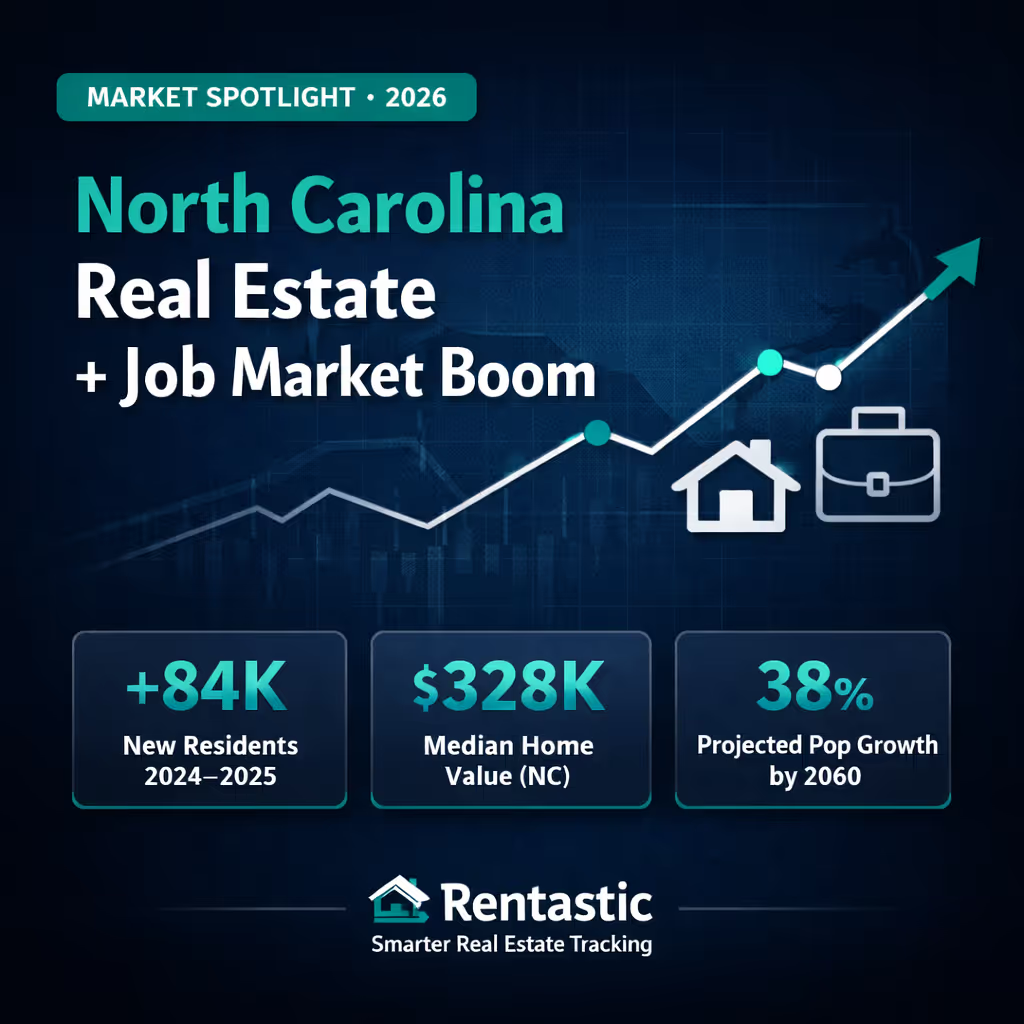
Between July 2024 and July 2025, North Carolina added approximately 84,000 new residents — more than any other U.S. state during that period. That surge places it among the fastest-growing states in the country.
Why the shift?
Rising housing prices and escalating insurance costs in Florida and Texas have slowed migration into those once-dominant Sunbelt destinations. Meanwhile, North Carolina offers:
For remote workers and hybrid professionalsm, that combination is powerful.
During the post-pandemic boom, Texas cities like Austin became magnets for tech workers. But recent lay offs and a cooling startup environment have slowed momentum. Employment in big tech firms and startups has declined in several Texas metros, while traditional hubs like New York City and the Bay Area regain strength.
At the same time, housing affordability frustrations have pushed many professionals to reconsider where they want to build long-term lives.
North Carolina has capitalized on that shift.
One of North Carolina’s hidden advantages? Its cities aren’t over whelming.
Metro areas like Raleigh, Durham, and Charlotte offer strong job markets without the congestion and price pressure of mega-cities.
Residents enjoy:
The Research Triangle —anchored by Raleigh, Durham, and Chapel Hill— has evolved into a diversified employment ecosystem rather than a single-industry boomtown.
While tech and finance remain strong pillars, North Carolina is broadening its economic base.
Pharmaceutical giants like Roche and Novartis are expanding life sciences operations in the state, creating thousands of construction and permanent jobs.
Add in manufacturing ,logistics, education, and healthcare, and you get an economy with depth — not just hype.
That kind of diversification reduces volatility and strengthens long-term housing demand.
Here’s what stands out:
North Carolina remains more affordable than the national average — especially compared to coastal tech hubs.
But investors need to understand something important: cash flow varies dramatically by market.
Charlotte is competitive and investor-heavy. With recent appreciation around 12%, it’s a strong play for growth.
Prime neighborhoods include:
For families and longer-term tenants, suburbs like Huntersville and Matthews offer solid demand.
Best strategy here: Appreciation-focused investing, especially for well-capitalized buyers.
Raleigh’s average rent(~$1,574) sits below the state average, even with median home prices around $424,924.
Durham’s cap rates hover around 4.4%, making leveraged cash flow challenging — but appreciation potential remains strong.
Major universities fuel steady rental demand:
Best strategy here: Long-term hold for appreciation with stable tenant pools.
With a median home price around $257,450, Greensboro offers a different value proposition.
Lower entry prices mean:
Its manufacturing, logistics, and tech sectors support stable employment.
Coastal charm meets investment opportunity in Wilmington.
Average home prices (~$406,726) require strong rents to pencil out, but:
This is more of a capital-growth and lifestyle market than a pure cash-flow play.
North Carolina’s biggest advantage is momentum.
Population growth.
Job diversification.
Educational institutions.
Geographic appeal.
But investors must choose their strategy carefully:
In higher-priced metros, leveraged buyers may struggle with immediate cash flow due to interest rates. However, appreciation, tax benefits, debt pay down, and future refinancing opportunities can make break-even deals strategic long-term wins.
North Carolina isn’t just growing — it’s evolving.
As Florida and Texas feel the strain of rising costs and market corrections, North Carolina is emerging as the Sunbelt’s most balanced opportunity: affordable enough to enter, diversified enough to endure, and attractive enough to sustain demand.
For investors willing to research neighborhoods, understand wage dynamics, and move decisively, the Tar Heel State offers something rare in today’s market:
Momentum with fundamentals.
And in real estate, that combination is hard to beat.
RECENT POSTS


© 2025 Rentastic
Rentastic is registered as a trademark. Terms and conditions, features, support, pricing, and service options subject to change without notice.














.png)
































































Comments