

From application to approval: a step-by-step tenant screening workflow for first-time landlords
If you are a first-time landlord, tenant screening can feel like a maze. You know one bad choice can mean late rent, damage, and months of stress, but you are also juggling legal rules and a stack of unfamiliar tools.
This guide walks you through a clear, step-by-step tenant screening workflow from application to approval. You will see what to do first, what to verify, which red flags matter, and where AI tools can safely speed things up. By the end, you will have a repeatable process you can run with confidence for every future vacancy.
If you need a shorter primer to pair with this workflow, you can also bookmark tenant screening 101: a simple checklist every new landlord should follow.
Before you even post your rental, decide what a qualified tenant looks like for this property. Clear criteria help you stay consistent and protect you from both bias and mistakes.
Start with the basics you will use for every applicant:
Write these criteria down. You will use them to screen every application the same way, which is key for fairness and for your own sanity.
You must also align your criteria with federal and state fair housing laws. In the United States, the Fair Housing Act bars discrimination based on race, color, religion, sex, national origin, familial status, or disability. Your questions, criteria, and decisions all need to stay away from those protected areas.
If you want a deeper dive into the compliance side, save enant screening checklist + legal tips: how first-time landlords stay compliant for after you finish this workflow.
Your tenant screening workflow from application to approval begins with a solid rental application. If the form is weak, the rest of your process will be slower and less reliable.
At a minimum, your application should capture:
This is your first filter. Sloppy or incomplete applications hint at how someone may handle rent payments and communication later. You can always follow up to clarify honest mistakes, but you should pay attention to patterns of missing or conflicting information.
In your listing and response emails, be clear that you will only process complete applications. That sets expectations and reduces back and forth for you and for applicants.
The strongest tenant screening workflows do not wait until later to request proof. You confirm what is on the application with documents that show income, identity, and rental history.
You can ask each applicant to submit:
Request documents through a secure channel, not regular email attachments if you can avoid it. Many tenant screening or property management platforms give you a safe upload link that keeps sensitive data in one place. This also cuts your manual filing work later.
If an applicant resists sharing basic proof of income and employment, that is an early warning sign. A good tenant understands that verification is part of a professional process.
Before you pay for reports or spend time calling references, run a quick paper screen. Here you compare what is on the application and the documents to your written criteria.
Look for simple mismatches:
If someone clearly does not qualify, you can stop here and send a polite, compliant rejection note. This saves you screening costs and prevents you from collecting unneeded data.
For applicants who pass this first filter, you move to deeper verification.
Verifying employment is one of the most important steps in your tenant screening workflow. You are not just checking that someone has a job, you are checking that their income is stable enough to support your rent.
You can use a simple three part approach:
For self employed or freelance applicants, focus more on total documented income over the last year and current contracts instead of a single employer reference. You may request extra documentation, such as tax returns, to build a clear picture of stability.
Past rental behavior is one of the best predictors of how a tenant will treat your property. Contacting previous landlords helps you see beyond the application.
Aim to speak with at least the current and one prior landlord. When you call, keep your questions short and factual:
Listen for hesitation or vague answers. A landlord who had a good experience will usually say so directly. Be aware that a current landlord could sugarcoat a problem tenant to help them move out, so the second prior landlord is sometimes even more revealing.
If you cannot reach a landlord, leave at least two messages at different times. Document your attempts so you can show you made a good faith effort if you ever need to defend your process.
For a deeper look at how skipped checks can hurt you, see first-time landlord mistakes: skipping this tenant screening checklist can cost you thousands.
Once you have basic verification in place, you can order formal screening reports. These give you an objective look at financial habits and serious legal issues.
In most places you can use a tenant screening service or credit bureau partner to run:
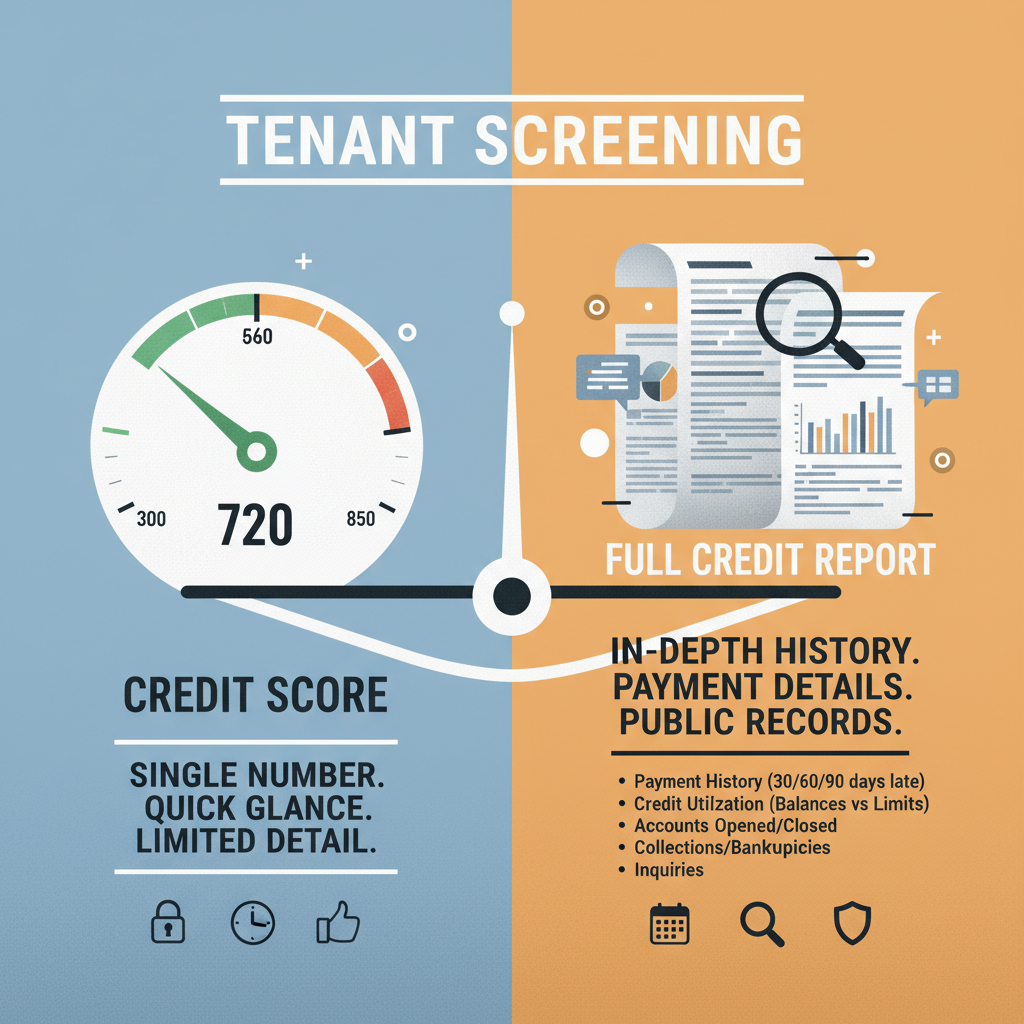
The credit report shows how the applicant handles debt, their payment patterns, and current obligations. You are looking for on time behavior and total debt load relative to income, not perfection. One old late payment on a store card is not the same as a pattern of recent collections.
Criminal checks and eviction searches must be handled carefully. You need to follow federal guidance and any local laws that limit which records you can consider, how far back you can look, and how you use the information in your decision. Some cities and states have specific rules around criminal background use in housing, so this is an area where you should double check current regulations in your jurisdiction.
Always get written consent before running any report. Many screening platforms include a consent box or digital signature section directly in the application, which keeps your workflow cleaner.
At this point you have a lot of information. Your next job is to step back and evaluate the applicant’s overall financial stability.
You can think in terms of three questions:
As you weigh all of this, avoid focusing on any single number in isolation. A tenant with a slightly lower credit score and strong income plus glowing rental history can be a better bet than a high score with shaky rent behavior.
Once you have a shortlist of qualified applicants, you can invite them to a short interview. This is your chance to check for fit, explain expectations, and answer their questions.
You can run interviews in person or by video call. Keep the structure simple:
This is not the time for intrusive personal questions. Stay away from anything related to protected characteristics such as family status, religion, or health. Focus on how they approach responsibilities as a tenant.
You are looking for clear communication, reasonable expectations, and a professional attitude. How someone shows up in this conversation often mirrors how they will show up when repairs or disagreements come up later.
Personal references are not as critical as income verification or landlord calls, but they add context. They can confirm character and reliability.
When you speak with a reference, you can ask:
Treat this as another small piece of the puzzle instead of a deciding factor. Friends and colleagues usually paint a positive picture, but you may still hear useful details about stability and reliability.
Throughout your tenant screening workflow from application to approval, you must stay inside fair housing rules. This is not just about avoiding lawsuits, it is about building a process that treats people fairly and holds up under scrutiny.
Some key practices to follow:
If a background check surfaces criminal history, follow any local guidance on individualized assessment. This can include looking at how old the offense is, whether it relates to property or safety, and what the person has done since. Blanket bans on any criminal record are risky in many jurisdictions.
For more on keeping your process legal as rules evolve, revisit enant screening checklist + legal tips: how first-time landlords stay compliant.
As of 2025, AI powered tenant screening tools and property management platforms can handle a lot of the heavy lifting for you, especially if you are a first-time landlord.
Here is how AI can fit into your process without replacing your judgment:
As with any technology, keep an eye on bias and transparency. You remain responsible for complying with fair housing rules, so you should understand what factors a tool uses and make your own final decisions.
Once you have collected applications, run checks, verified details, and spoken with your top candidates, it is time to decide.
Use a simple approach:
Document everything. Keep a simple log that shows application dates, key screening steps, and reasons for approval or denial. This protects you if a decision is later challenged and also gives you a clear record you can review to refine your process next time.
Your tenant screening workflow does not end at approval. A strong onboarding makes it more likely that all the work you just did turns into a stable, long term tenancy.
Before move in, you can:
This sets expectations on both sides and shows that you run your rental like a business. Tenants who feel the process is clear and fair are more likely to treat your property with respect.
If you want a more expansive reference for your next vacancy, you can also keep the complete tenant screening checklist for first-time landlords (2026 guide) in your toolkit.
When you look at the full path from application to approval, tenant screening becomes a repeatable workflow instead of guesswork. You:
You do not have to get all of this perfect on your first try. Pick one or two steps to improve for your next vacancy and build from there. Over time, this workflow will feel natural, and your rental will benefit from fewer surprises and better tenants.
RECENT POSTS


© 2025 Rentastic
Rentastic is registered as a trademark. Terms and conditions, features, support, pricing, and service options subject to change without notice.














.png)

































































Comments